

HOUSE DUCK · AUTOMATIC TRANSLATION
I Thought Making Indie Game Marketing Was Too Expensive So I Started With a Blog | House Duck
When I finished making the game,
I thought all I had to do now was show it to people.
However, after looking into indie game marketing costs,
I quietly closed the window.
Whether the game is fun and whether people will keep playing it
haven't been verified with numbers yet,
and I wasn't in a position to run large-scale ads right away.
So I decided to spend time instead of money.
Rather than a game whose creator is unknown,
a game where you can see a person making mistakes, fixing them, and trying again
felt like it could be remembered a bit longer.
Rather than a game that appears once through ads and disappears,
I wanted to become a game where the creator's thoughts and concerns remain.
That is how I decided to use the House Duck blog
as the starting point for marketing.
Trying to promote the game, I ended up making a company website first.
The first step was creating the address for House Duck.
Porkbun at houseduck.in I created a domain and
connected the company website and blog to that address.
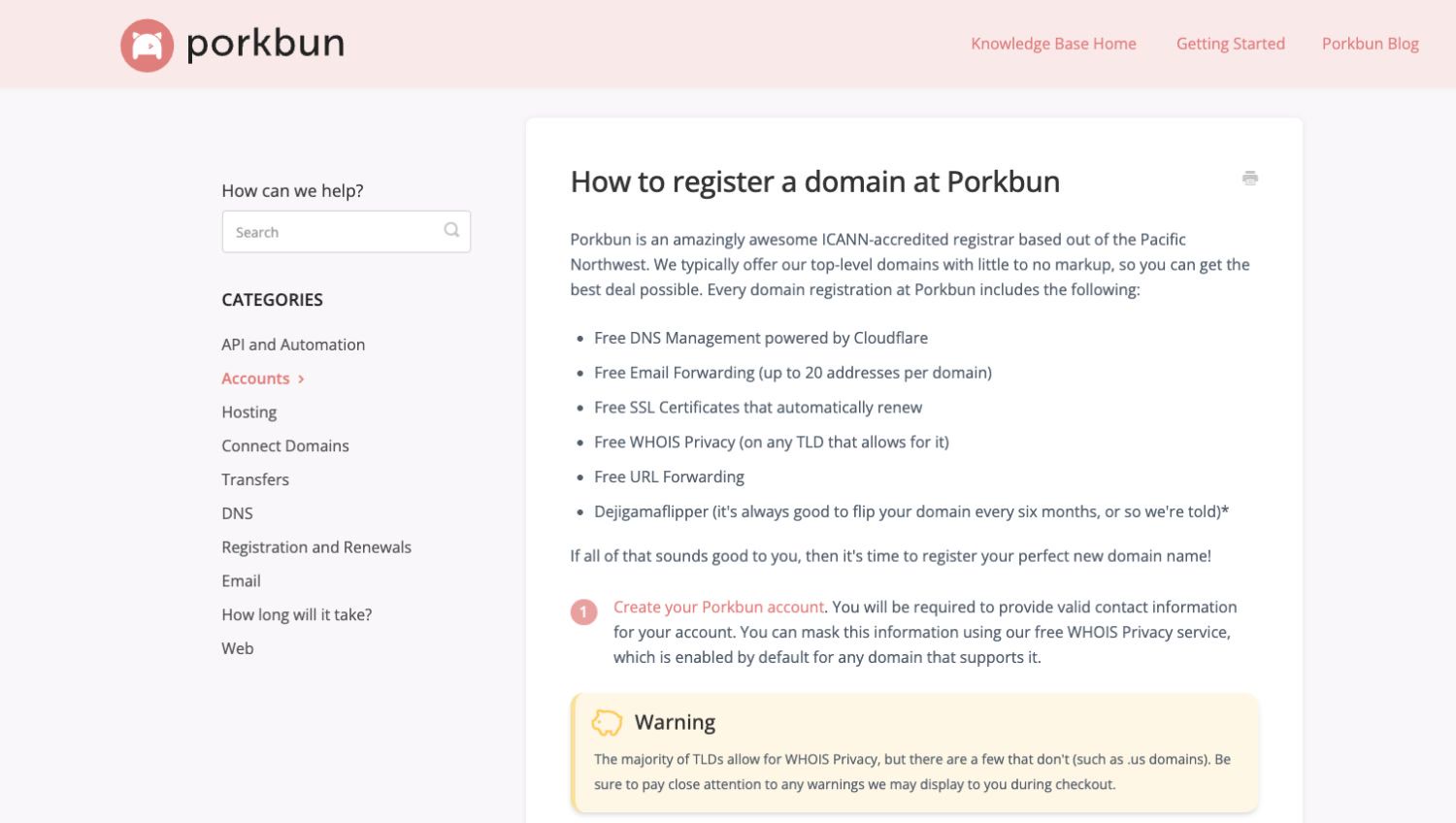
I didn't want to just leave the site looking like a single business card.
What kind of game I am making right now,
who runs it, and where to contact if a problem arises
I made it so even a first-time visitor could find these details.
While I received a lot of help from AI in making the site,
the colors, sentences, screen order, and mobile appearance
were continually opened and revised by me.
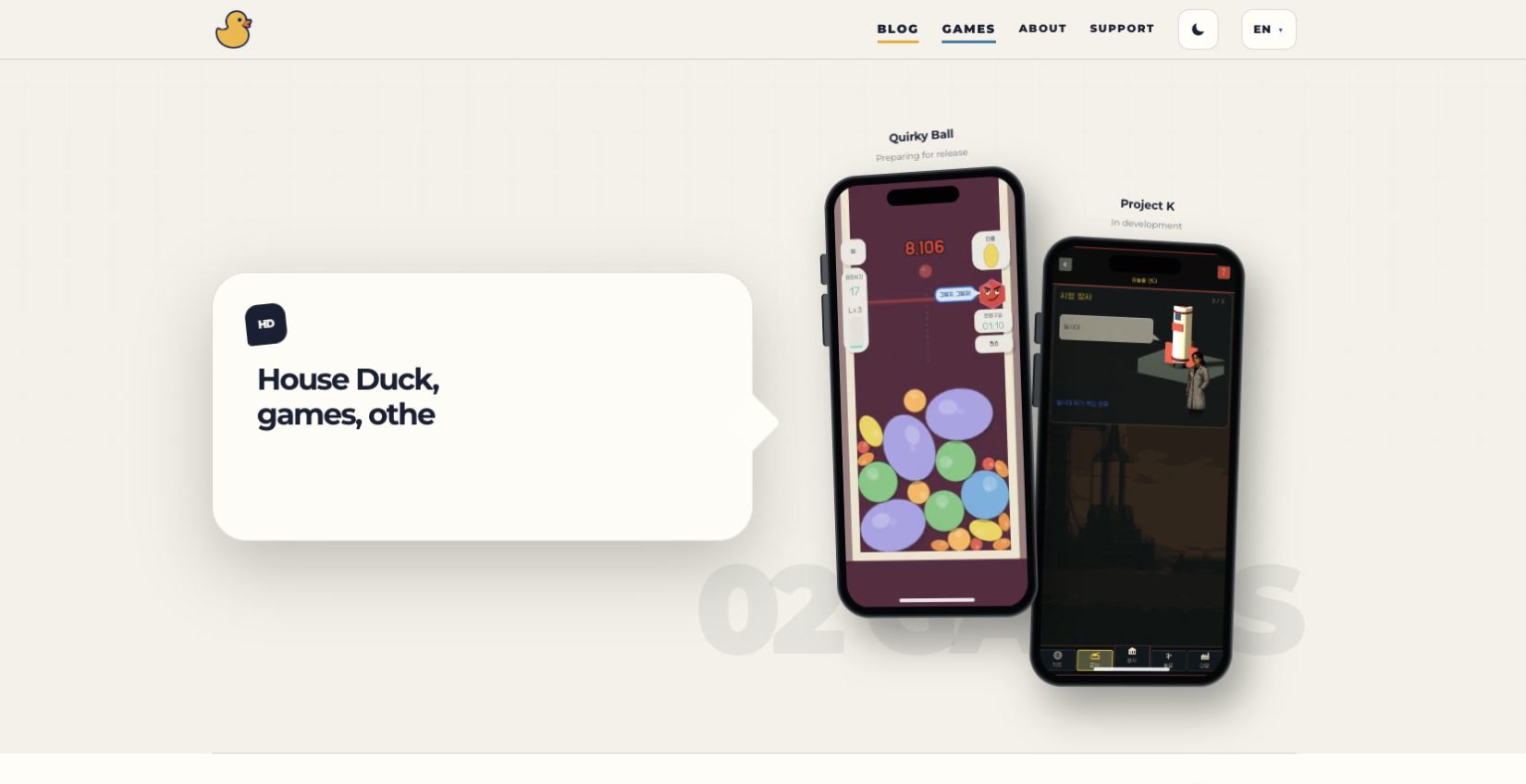
Even if someone who clicks an ad doesn't install it right away,
if a person happens to stumble in while searching,
"They really are making a game here."
I wanted them to feel at least that much.
Once I made a site, documents kept following.
After creating the homepage,
Terms of Service, Privacy Policy, and Impressum were waiting.
I run my business in Germany, not Korea,
and the game can also meet EU users.
Therefore, I could not just finish by
copying and pasting sentences from a Korean site.
German DDG business information display standards were checked while
writing what information is handled and why, how long it is stored,
and where to contact if deletion is desired.
I couldn't just leave it out because I didn't know.
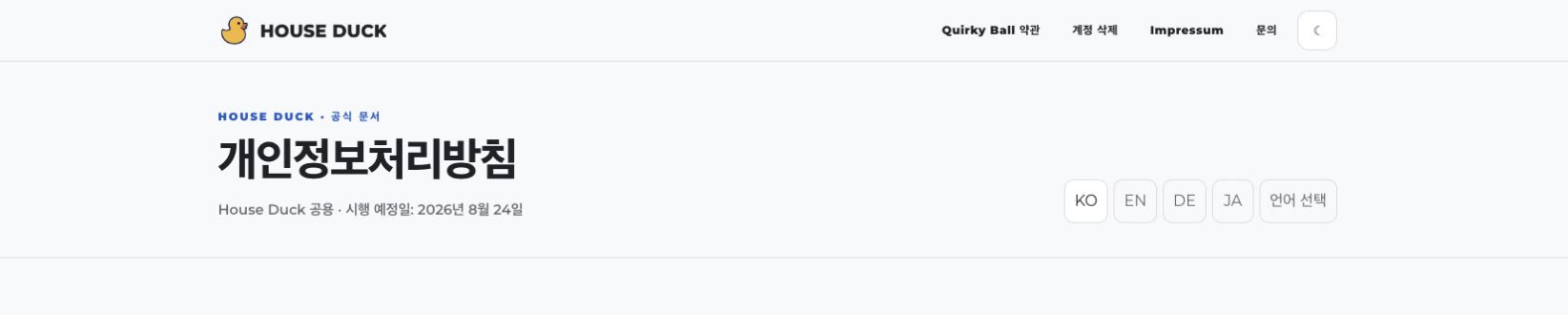
The currently published documents
have GDPR-related items prepared, considering even EU users.
This doesn't mean it is a complete answer with all legal reviews finished.
If the features used in the game and site change,
the documents must also be re-checked and revised accordingly.
I cannot say everything is prepared perfectly.
Still, I wanted to write down in advance what users provide, where to contact,
and what they can ask to be deleted.
Making two company emails was also a task.
If a problem occurs with the game
and players have nowhere to contact, that is troublesome.
Instead of exposing a personal Gmail address,
from ImprovMX support@houseduck.in and
business@houseduck.in were created.
I separated inquiries and business addresses
and connected incoming emails so I could check them in familiar Gmail
and reply using the company address.
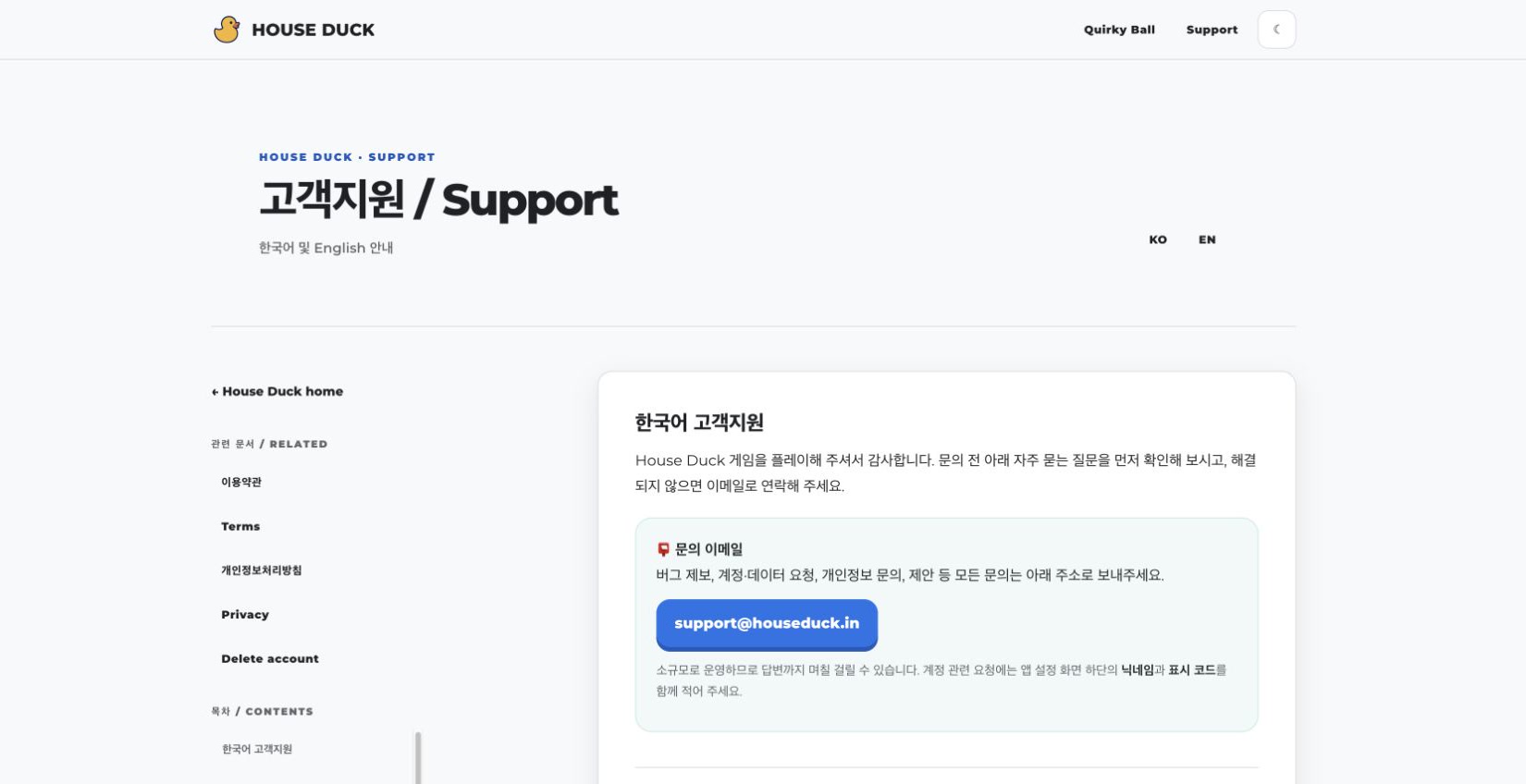
I went a step further from here.
Instead of constantly searching through the inbox,
I built a feature to search inquiries in the House Duck admin console,
categorize processing statuses, and handle reply templates and attachments
all on a single screen.
The goal is not to imitate a grandiose customer center.
So that when an inquiry comes in later,
even if I am not in front of my laptop, I can check it on my mobile phone
and not miss urgent issues.
Rather than preparing after there are many users,
I made it beforehand so as not to miss a single person when they arrive.
If it is an era read by AI, AI also needed an entrance.
Nowadays, people still type directly into the search bar to enter,
but asking AI about games or companies has also become frequent.
Therefore, alongside sitemaps and robots.txt,
I also created llms.txt, which AI can reference when reading public information, and
House Duck public MCP as well.
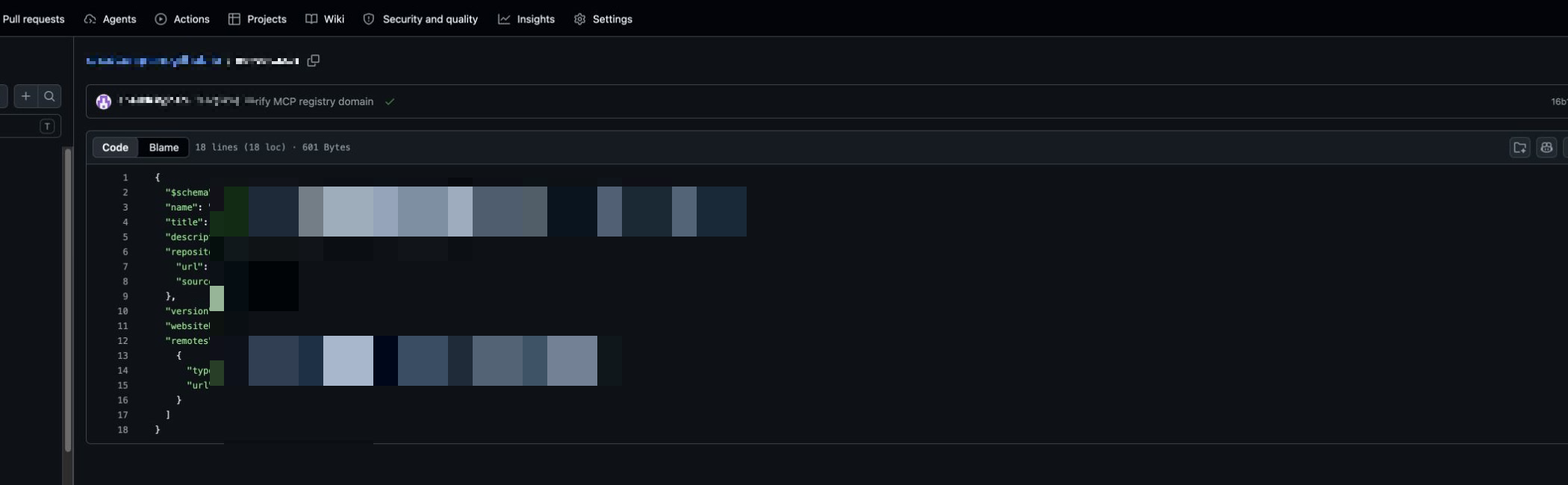
The name might sound a bit difficult,
but it is closer to a guidebook made so that AI can read without wandering much about what kind of company House Duck is and what games it creates.
It does not open up administrator features or personal information,
but only allows reading information already made public on the site and blog.
Of course, creating an MCP
does not mean Google search rankings will suddenly rise.
It is simply paving one more path for both people and AI
when someone searches for House Duck.
As a lacking one-person company, I wanted to be more visible.
1
Just because you make domains and sites, terms and privacy policies,
and even email and customer support screens,
game installation counts do not increase by themselves.
Not spending on advertising
does not mean the probability of success increases either.
Still, to someone who searched and entered,
I did not want to look like an abandoned game and an unreachable company.
House Duck is still a lacking 1 company.
Therefore, I want to explain more often, receive contacts more easily,
and show the process of fixing problems when they arise.
I am not sure if this blog will generate sales right away.
Still, when someone visits Quirky Ball,
“This place is run by humans.”
I hope they feel at least that much.